Apr 21st, 2026
Smart Labels Explained: RFID, NFC, and Product Authentication for Modern Brands
A label used to have one job: identify the product. Today, it can do much more. Smart labels embed technology directly into the label itself — enabling products to communicate with phones, scanners, and supply chain systems without any visible interface beyond the label on the package.
For brands looking to improve supply chain visibility, fight counterfeiting, or create direct digital touchpoints with consumers, smart labels are worth understanding. Here's a straightforward look at the three main technologies: RFID, NFC, and Berify.
RFID Labels: Efficiency at Scale
RFID — Radio Frequency Identification — uses a small antenna and microchip embedded in the label to transmit a unique identifier when scanned by an RFID reader. Unlike barcodes, RFID labels don't require a direct line of sight to be read. A reader can scan dozens or even hundreds of RFID-tagged items simultaneously, from several feet away.
For retail and logistics operations, this is transformative. Inventory counts that previously took hours can be completed in minutes. Items can be tracked as they move through a warehouse, onto a truck, and into a store — automatically, without manual scanning.
RFID labels are particularly common in apparel retail, consumer electronics, pharmaceuticals, and any supply chain where inventory accuracy and speed are critical. The labels themselves look like ordinary labels from the outside; the antenna and chip are laminated inside the label construction.
NFC Labels: Consumer Engagement in a Tap
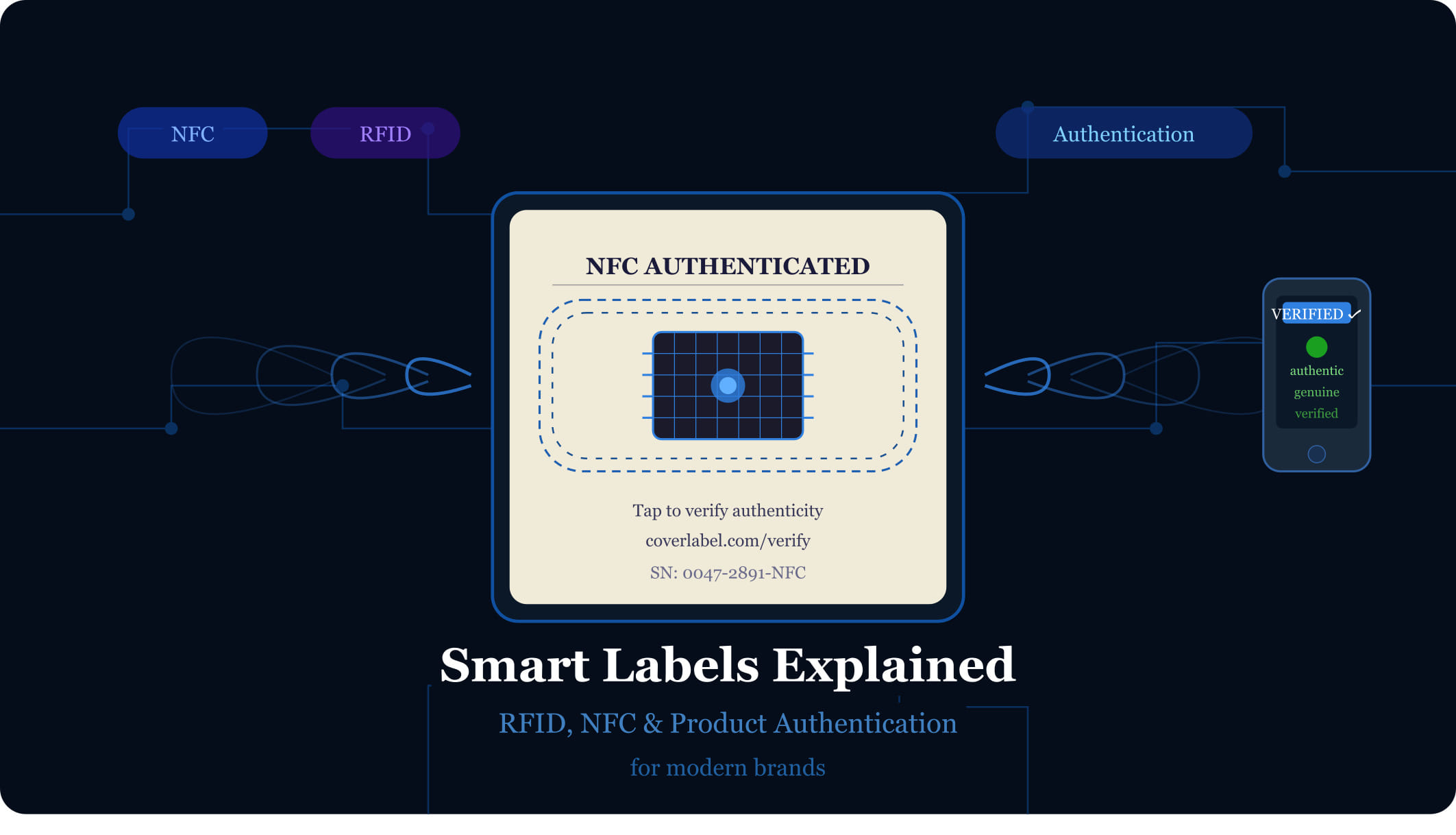
NFC — Near Field Communication — is a short-range wireless technology that allows a smartphone to read data from a label simply by tapping or holding the phone close to it. If you've ever used a contactless payment terminal or tapped your phone to pair a Bluetooth speaker, you've used NFC.
On product labels, NFC opens up a direct channel between the physical product and the consumer's smartphone. A tap can trigger virtually anything: a product registration page, a video showing how the product was made, a loyalty program enrollment, augmented reality content, a reorder link, or a landing page with expanded product information.
NFC labels are increasingly popular among premium consumer brands — wine and spirits, cosmetics, supplements, luxury goods — where the post-purchase brand experience is an extension of the product itself. They require no app download and work with the native camera or NFC reader on modern smartphones.
Berify: Authentication Built Into the Label
Berify is a product authentication platform that uses a combination of unique physical identifiers and a consumer-facing verification system to help brands protect against counterfeiting and gray-market diversion.
Each Berify-enabled label is assigned a unique, encrypted code that's nearly impossible to replicate. Consumers, retailers, or supply chain partners can verify the authenticity of a product by scanning the label — either through the Berify app or a QR code — and receiving immediate confirmation that the product is genuine and has reached them through an authorized channel.
For brands that have experienced counterfeiting, unauthorized reselling, or consumer trust issues around product authenticity, Berify adds a layer of verifiable proof that protects both the brand and the end customer. It also gives brands visibility into where and how their products are being verified — data that can inform distribution and marketing strategy.
Choosing the Right Smart Label Technology
The right technology depends on what problem you're trying to solve:
If the goal is supply chain efficiency and inventory accuracy at scale, RFID is the right fit.
If the goal is creating a consumer-facing digital experience from the physical product, NFC is the most accessible and consumer-friendly option.
If the goal is protecting against counterfeiting and building consumer trust in product authenticity, Berify provides a purpose-built solution.
These technologies aren't mutually exclusive. Some brands layer NFC consumer engagement with Berify authentication on the same label — providing both a rich consumer experience and anti-counterfeiting protection in a single label.
What to Consider Before Adding Smart Label Technology
Smart labels do add cost compared to standard labels, and that cost varies depending on the technology and volume. Before investing, it's worth being clear on the use case and the expected return — whether that's measured in supply chain savings, reduced counterfeiting losses, increased consumer engagement, or brand differentiation.
It's also worth confirming that your downstream partners — retailers, distributors, or consumers — have the infrastructure or devices to interact with the technology. RFID requires compatible readers; NFC works with most modern smartphones; Berify requires a scanning step that needs to be built into your product experience or distribution workflow.
Cover Label can help you explore smart label options including RFID, NFC, and Berify authentication — integrated into the same high-quality custom labels we produce for brands of all sizes. Reach out to our team to discuss your project at coverlabel.com.
CONTACT US
Get in Touch
Have questions or ready to get started? Our team is here to provide expert guidance and premium label solutions tailored to your needs. Fill out the form below, and we’ll be in touch shortly to discuss your project.