Apr 21st, 2026
Eco-Friendly Label Options: How Sustainable Packaging Can Grow Your Brand
Sustainability is no longer a niche concern — it's a mainstream purchasing criterion. Research consistently shows that consumers across age groups are willing to pay a premium for products from brands that demonstrate genuine environmental responsibility. And packaging, including labels, is one of the most visible expressions of a brand's commitment to sustainability.
The label industry has evolved substantially in response. There are now more high-quality eco-friendly label options than ever before — materials that reduce environmental impact without sacrificing print quality, durability, or shelf appeal. Here's what you need to know.
Recycled Content Labels
Labels manufactured from post-consumer recycled (PCR) content — including recycled paper, recycled plastic films, and recycled liner materials — represent one of the most accessible entry points into sustainable packaging.
Recycled paper labels, for example, are available with FSC (Forest Stewardship Council) certification, verifying that fiber content comes from responsibly managed sources. These labels print beautifully in matte finishes and are a natural fit for brands with an artisan, natural, or earthy aesthetic.
Recycled film labels offer the durability of synthetic materials while reducing reliance on virgin plastics — a meaningful trade-off for brands in the personal care, cleaning products, or beverage categories.
Compostable and Biodegradable Labels
Compostable labels are designed to break down in commercial composting conditions within a specified timeframe, leaving no toxic residue. They're made from plant-based materials — often PLA (polylactic acid) derived from corn starch — and are typically certified to established composting standards.
These labels are particularly relevant for food brands, organic products, and companies targeting consumers who are actively reducing their waste footprint. However, it's important to note that compostable labels require specific disposal conditions — they won't break down in a home compost pile or standard landfill at the same rate.
Biodegradable labels offer a broader range of breakdown conditions, though certifications and definitions vary more widely. When evaluating biodegradable options, look for third-party certifications rather than self-reported claims.
How Sustainable Labels Translate to Business Value
Beyond the environmental case, there's a clear commercial case for sustainable packaging:
Brand differentiation: In crowded categories, sustainability credentials provide a meaningful point of distinction.
Consumer loyalty: Customers who choose your brand in part because of your environmental values tend to be more loyal and more likely to advocate for the brand.
Retail partnerships: Many major retailers have introduced sustainability requirements for the brands they carry — getting ahead of this trend is increasingly a prerequisite for retail distribution.
Regulatory preparedness: Packaging regulations in the EU and increasingly in the US are moving toward mandatory sustainability requirements. Transitioning now avoids reactive, costly changes later.
Communicating Your Sustainability Commitment on the Label
Finally, if you make the switch to sustainable label materials, make sure customers know about it. A small but clear callout on your label — whether a certification logo, a line of copy, or a QR code linking to your sustainability page — ensures that your investment in sustainable packaging is visible to the people who care most about it.
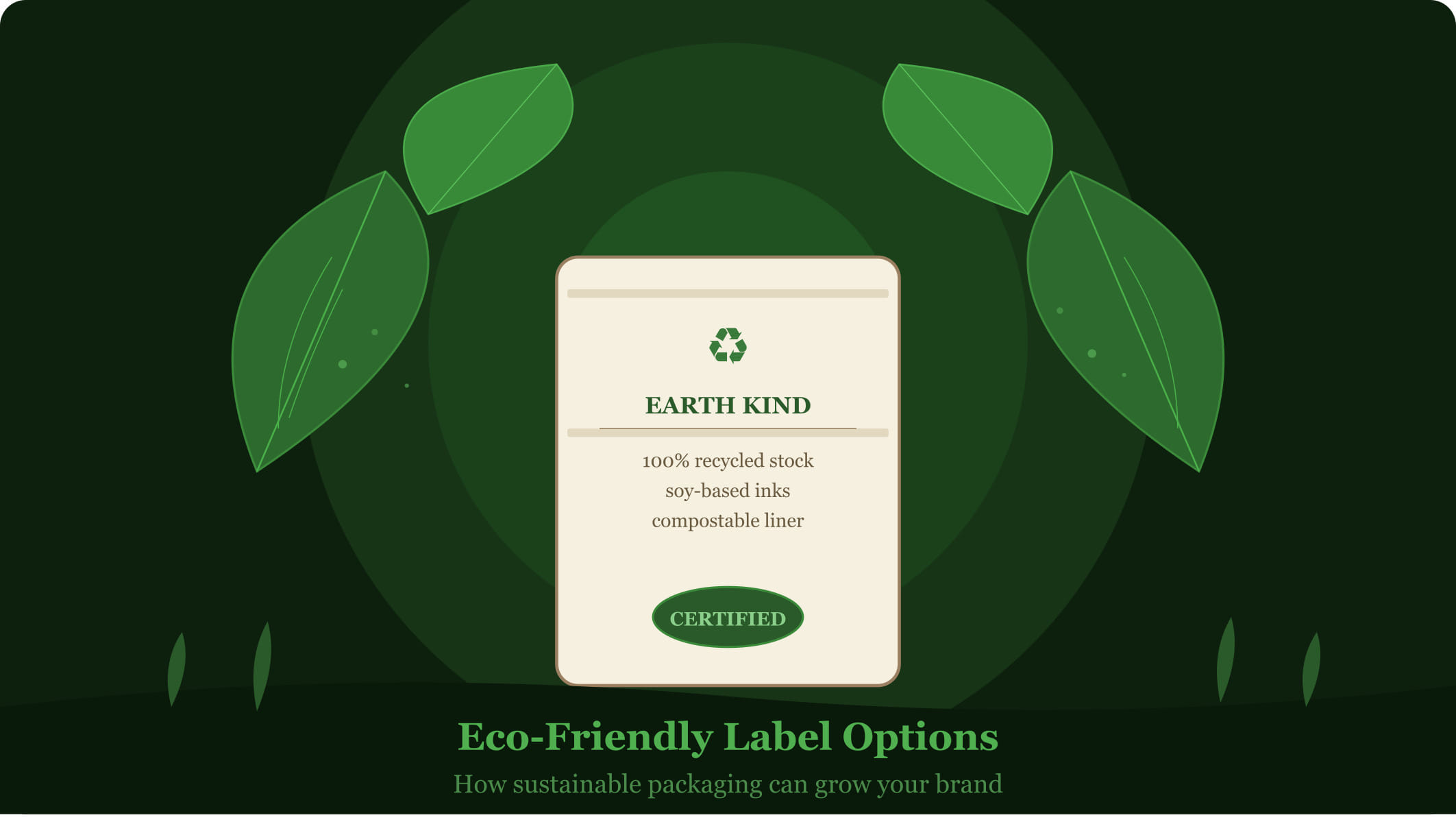
Avoid vague language like 'eco-friendly' without supporting specifics. Consumers are increasingly sophisticated about greenwashing and respond better to concrete claims: 'Label made from 100% recycled paper' or 'FSC Certified materials' are more credible than broad environmental statements.
Cover Label offers a growing range of sustainable label materials — including recycled content and compostable options — to help brands reduce their environmental footprint without compromising on quality. Explore your options at coverlabel.com.
CONTACT US
Get in Touch
Have questions or ready to get started? Our team is here to provide expert guidance and premium label solutions tailored to your needs. Fill out the form below, and we’ll be in touch shortly to discuss your project.